Sales Mon–Sat 9–6 · Sun closed  ·  Service Mon–Fri 8–5

Buyer’s guide

RV Types & Tow Guide

Nine kinds of RV, what each one is like to own, and how to read the weights before you hitch up. Every unit we list shows its length, dry weight and sleeping capacity up front.

Towables first

Find your type

Figures by type are typical examples, not the specifications of any unit we have in stock — ranges vary by maker, model and year. Each unit’s listing shows its own figures. Weights are manufacturer dry figures. Check your vehicle’s rating and payload before towing.

Travel Trailer

Travel Trailer

Towable

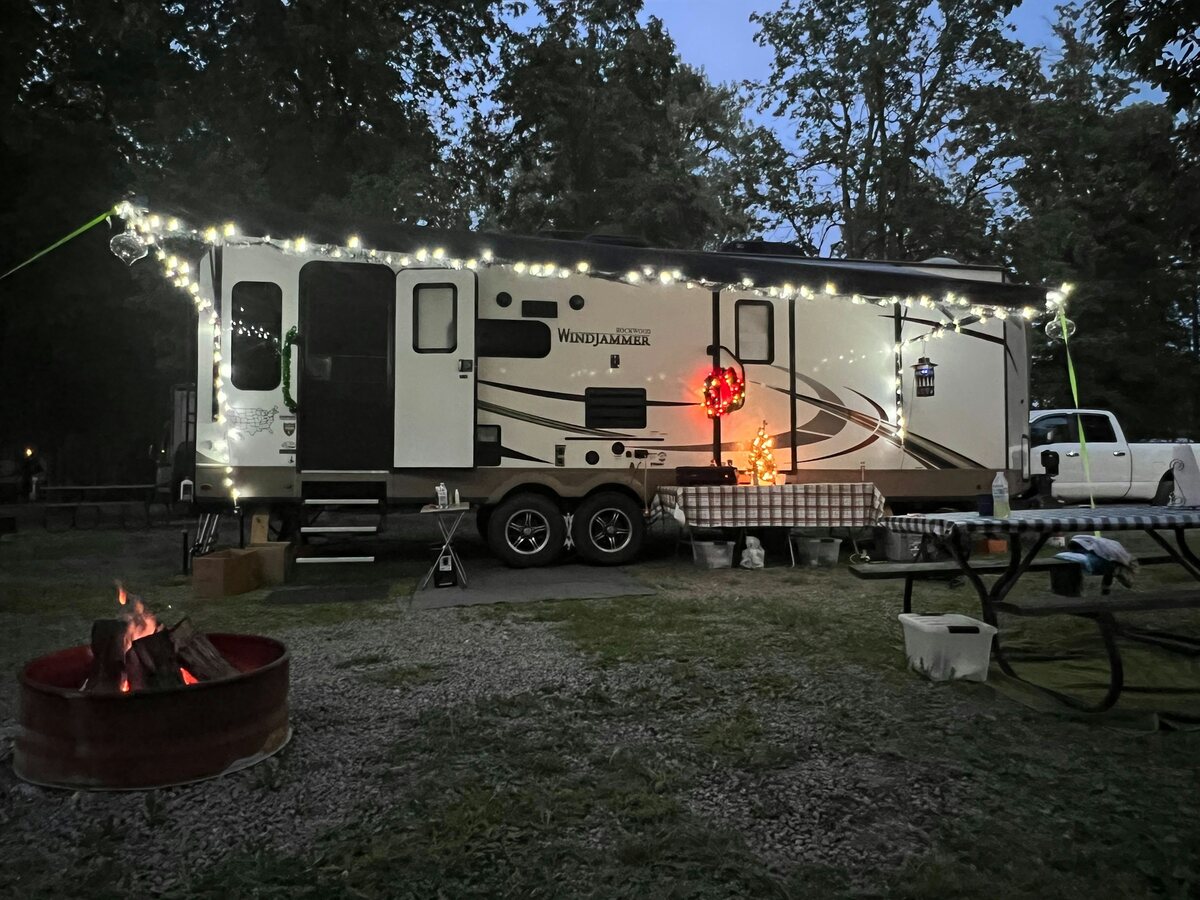
Travel trailers

The widest choice of size and layout, from short models for two to bunkhouses that sleep a family. A travel trailer connects to a ball hitch on your vehicle’s receiver, and many are towed with a weight-distributing hitch and sway control.

Suits

First-time owners and growing families

Weekend trips and week-long stays

Unhitching at camp and driving the truck

Typical length

18–38 ft

Typical dry weight

3,000–9,000 lb

Hitch

Ball, on the receiver

Shop travel trailers
7 travel trailers

listed

Fifth Wheel

Fifth Wheel

Towable

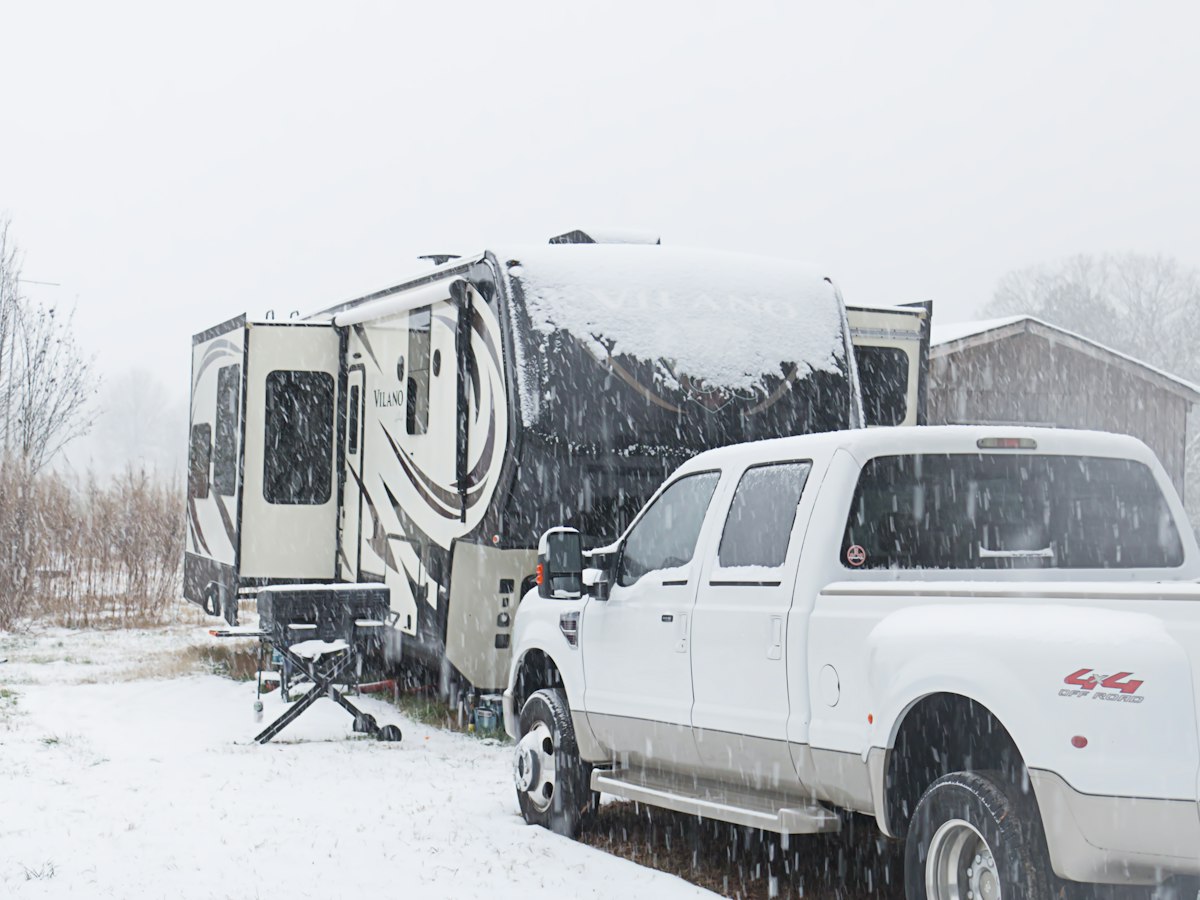
Fifth wheels

The front section rides over the pickup bed on a fifth-wheel hitch. That buys more headroom, split-level floorplans and a shorter rig for the space inside. You need a pickup with a fifth-wheel hitch installed in the bed.

Suits

Long stays and full-time living

Residential-style kitchens and living rooms

Owners with a pickup set up for a bed hitch

Typical length

28–45 ft

Typical dry weight

8,000–18,000 lb

Hitch

Fifth-wheel, in the pickup bed

Shop fifth wheels
5 fifth wheels

listed

Toy Hauler

Toy Hauler

Towable

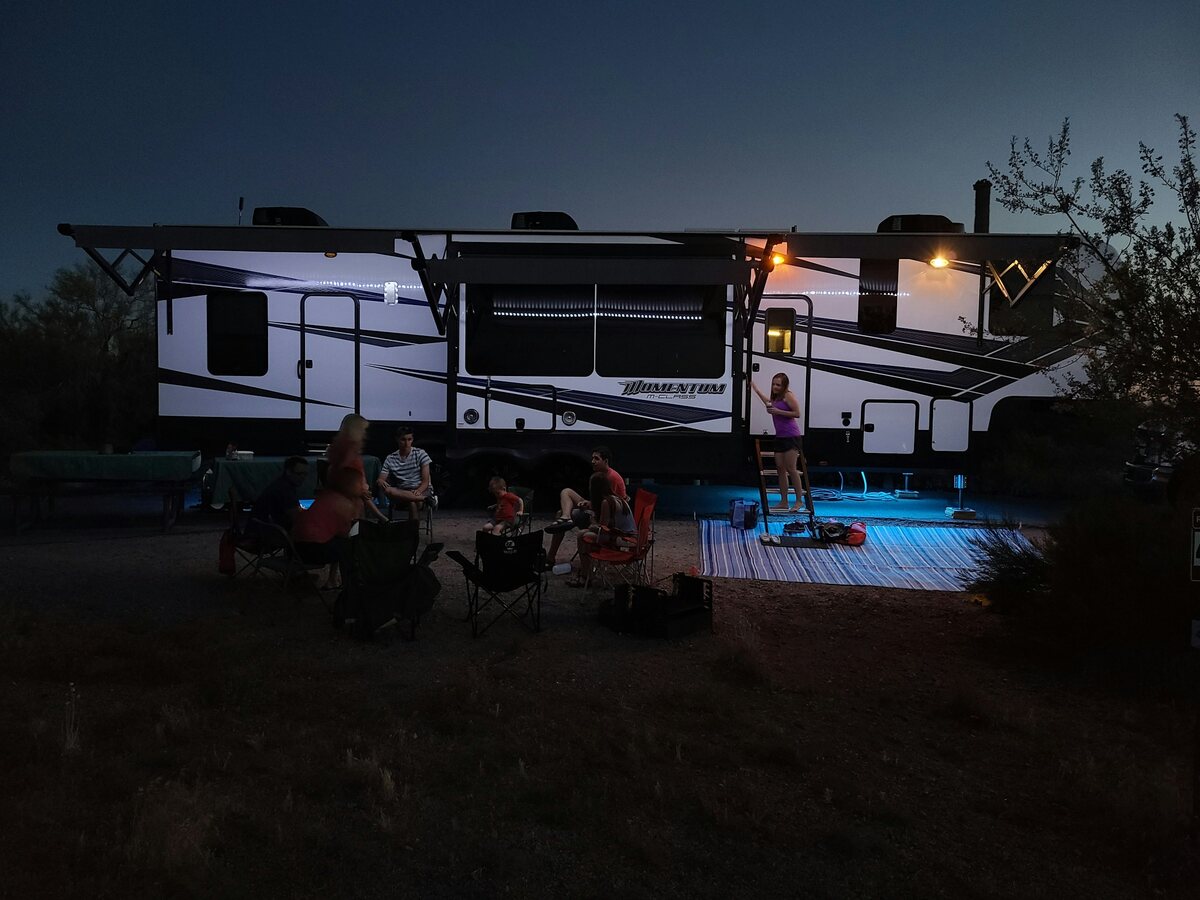
Toy haulers

A rear ramp door opens onto a garage for bikes, side-by-sides or gear, and many garages convert to a patio, dining area or extra beds. Toy haulers are built as travel trailers and as fifth wheels, so the hitch follows the model.

Suits

Riders who bring their toys

Race weekends, trails and the lake

A garage that doubles as living space

Typical length

21–45 ft

Typical dry weight

5,000–18,000 lb

Hitch

Ball or fifth-wheel, by model

Shop toy haulers
5 toy haulers

listed

Pop-up / Hybrid

Pop-up / Hybrid

Towable

Pop-ups & hybrids

Sections fold out at camp and fold away for the road, so a low, compact trailer opens into room for a family. Pop-ups have fold-down canvas walls; hybrids pair a hard-sided body with pull-out tent beds.

Suits

Families moving up from a tent

Low garage or driveway storage

Buyers who want a compact, low-profile trailer

Typical length

12–26 ft

Typical dry weight

1,500–5,500 lb

Hitch

Ball, on the receiver

Shop pop-ups & hybrids
3 pop-ups and hybrids

listed

Truck Camper

Truck Camper

Truck-mounted

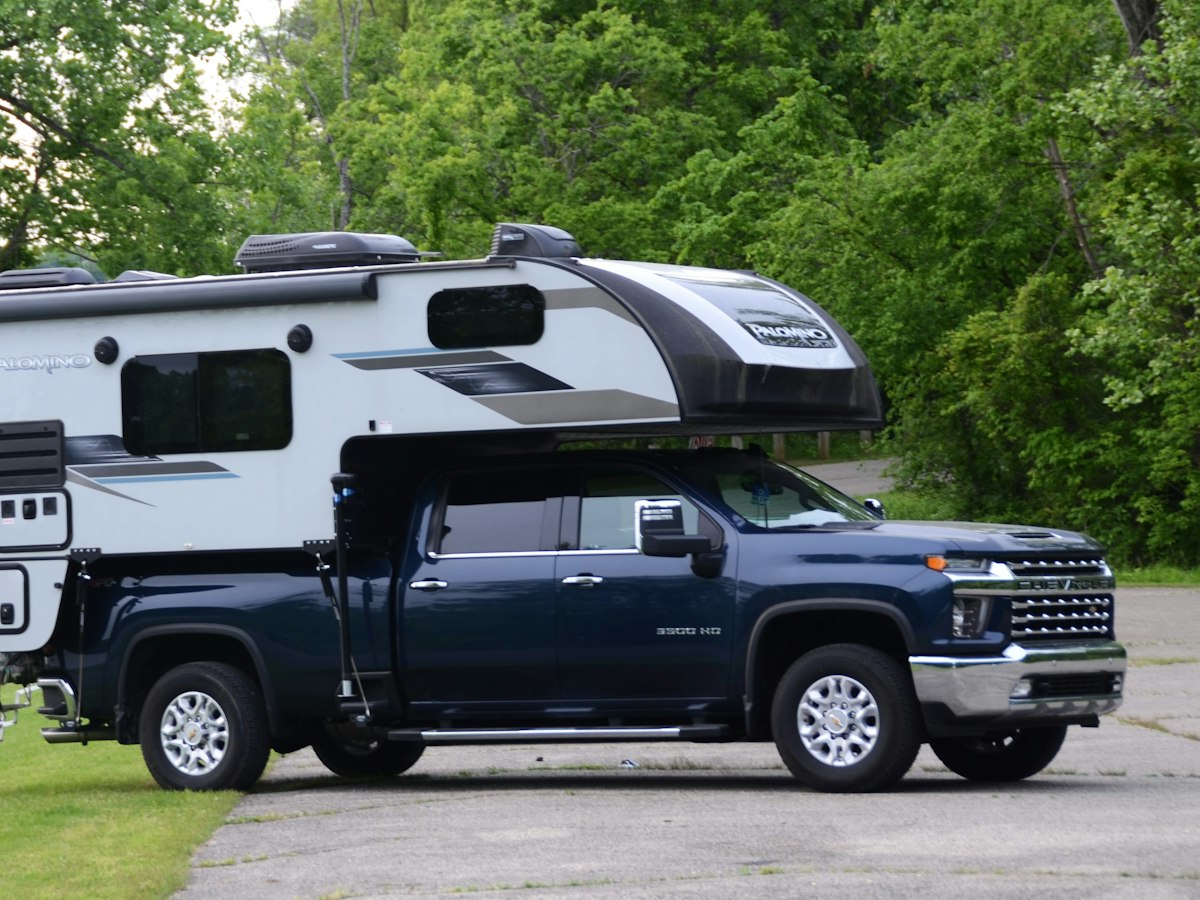
Truck campers

The camper slides into a pickup bed and is secured with tie-downs, so the whole rig parks in one space and goes where a trailer won’t. Its full loaded weight is carried by the truck, so the number to check is your truck’s payload, not a towing rating.

Suits

Back roads and remote camping

One vehicle to drive and park

Quick trips with no hitching

Typical dry weight

1,000–4,500 lb

Counts against

Your truck’s payload

Hitch

None — it rides in the bed

Shop truck campers
3 truck campers

listed

Destination Trailer

Destination Trailer

Towable

Destination trailers

Built wide and tall for a seasonal site, with residential furniture, a full kitchen and big windows. Many owners have one delivered and set up once rather than towing it from trip to trip.

Suits

Seasonal and lakeside sites

A cabin without building one

Families who stay put for the summer

Typical length

35–44 ft

Typical dry weight

9,000–14,000 lb

Hitch

Ball, usually moved by a hauler

Shop destination trailers
2 destination trailers

listed

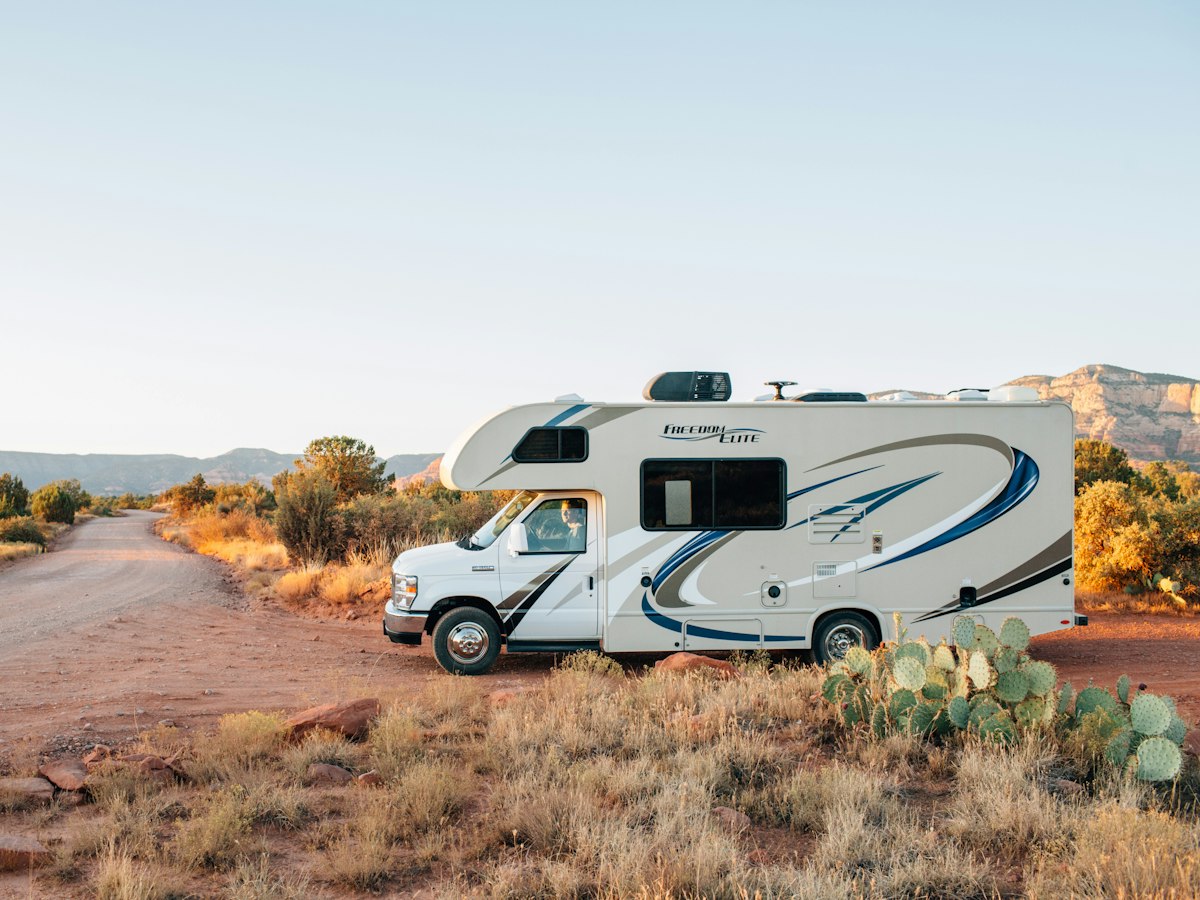
Class C

Class C

Motorhome

Class C motorhomes

Built on a van or truck chassis, with the familiar bed over the cab. Drive it, park it, and everyone rides inside. Many owners tow a small car behind for trips into town — the chassis has its own towing rating.

Suits

Families who would rather drive than tow

Road trips with stops every night

Owners new to RVing

Typical length

21–33 ft

Typical GVWR

11,000–15,000 lb

Hitch

None — you drive it

Shop Class C
3 Class C motorhomes

listed

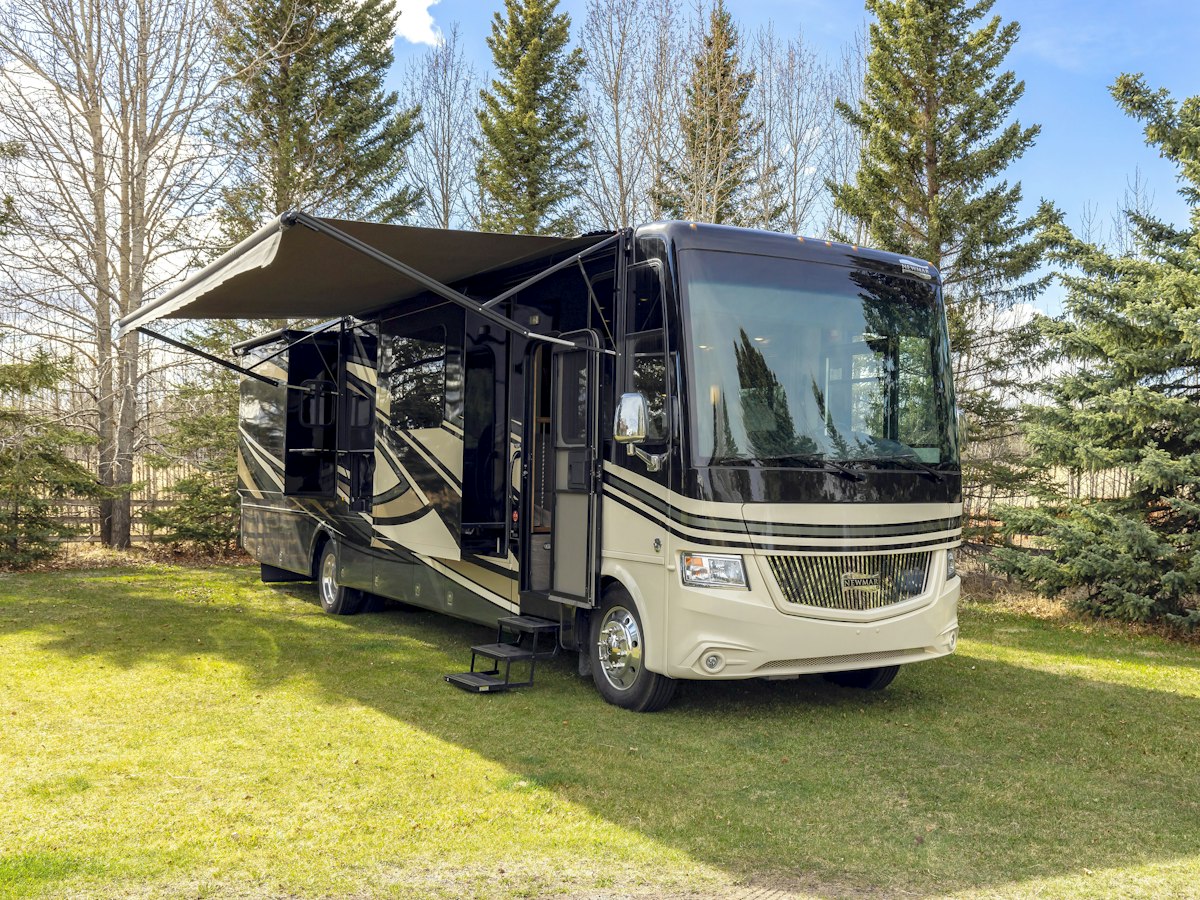
Class A

Class A

Motorhome

Class A motorhomes

The largest drivable RVs: a flat front, a big windshield and a full-size floorplan on a gas or diesel chassis. Built for long days on the road and long stays at the end of them.

Suits

Full-time and long-distance travel

Residential comfort on the road

Owners at ease driving a large vehicle

Typical length

28–45 ft

Typical GVWR

16,000–36,000 lb

Hitch

None — you drive it

Shop Class A
2 Class A motorhomes

listed

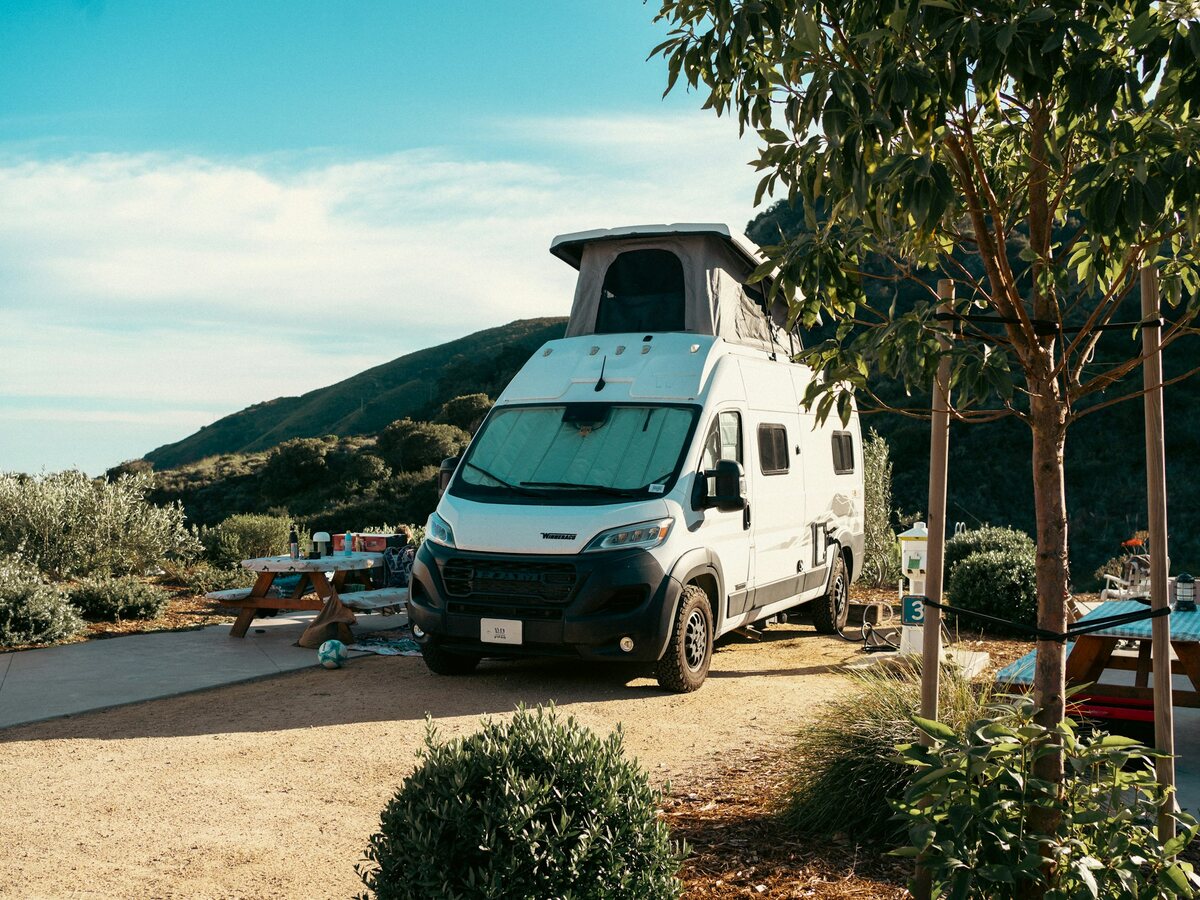
Class B

Class B

Motorhome

Class B camper vans

A camper built inside a full-size van body. It parks in a normal space, drives like a large van, and carries a compact galley, a bed and often a wet bath.

Suits

Solo travelers and couples

Everyday driving plus weekend trips

City parking and quick getaways

Typical length

17–24 ft

Typical GVWR

8,500–11,500 lb

Hitch

None — you drive it

Shop Class B
2 Class B camper vans

listed

We show every weight. Your truck’s ratings make the call.

Tow guide

How to read the weights

Every listing shows a unit’s length, dry weight, hitch weight and GVWR. Here is what each number means, where to find the ratings on your own vehicle, and what to check before you tow. We don’t calculate whether a vehicle can tow a unit — that is your vehicle maker’s rating and your call.

On the trailer

Dry weight

The unit as it left the factory: no water, propane, batteries, gear or dealer-added options. Makers publish it the same way, which makes it the fair figure for comparing units. It is not what you will tow.

Cargo carrying capacity

How much you can add — water, propane, gear and food all count. Dry weight plus cargo carrying capacity equals the GVWR.

GVWR

Gross vehicle weight rating: the most the unit may weigh fully loaded. Plan your towing around this number, not dry weight.

Hitch weight

The downward load a ball-hitch trailer puts on your vehicle’s hitch, commonly 10–15% of the trailer’s loaded weight. It rides on your vehicle, so it counts against payload.

Pin weight

The same load for a fifth wheel, carried in the pickup bed and commonly 15–25% of the loaded weight. It counts against payload too.

On your truck

Payload

The most your vehicle may carry in people, cargo and hitch or pin weight combined.

Towing capacity

The heaviest trailer your vehicle’s maker rates it to pull, for your exact configuration.

GCWR

Gross combined weight rating: the most the loaded vehicle and loaded trailer may weigh together.

GAWR

Gross axle weight rating: the most each axle may carry. The rear axle is the one a hitch loads.

Where to find them

On the trailer

Look for the weight labels on the front road side of the trailer, or inside the entry door or a cabinet near it. The certification label gives the GVWR and axle ratings; the cargo carrying capacity label gives the weight as built. The listing shows the maker’s published figures.

On your truck

The tire and loading label on the driver’s door jamb gives the most your occupants and cargo may weigh — that is your payload. The certification label beside it gives the GVWR and axle ratings. Towing capacity and GCWR are in the owner’s manual or the maker’s towing guide.

Before you hitch up

1 Start from GVWR

Plan with the most the unit can weigh loaded, not its dry weight.

2 Find your ratings

Payload and GVWR from the door jamb, towing capacity and GCWR from the manual — for your exact vehicle, not the model line.

3 Count the hitch against payload

Hitch or pin weight comes out of payload, along with every passenger and everything in the cab and bed.

4 Weigh the loaded rig

A certified truck scale gives real axle and total weights. Weigh it the way you travel.

This guide is general information, not towing advice. Your vehicle maker’s ratings, its owner’s manual and a certified scale are the final word.

Questions

Towing questions, answered straight

Can you tell me if my truck can tow it?

We’ll show you the unit’s dry weight, hitch weight and GVWR, and where to find your truck’s ratings. Whether it can tow it is your truck maker’s rating and your call — we don’t calculate it.

Because every maker publishes it the same way, it is the fairest figure for comparing one unit with another. Before you tow, plan with the unit’s GVWR — water, propane, batteries and gear all add weight.

Many travel trailers are towed with one, and some vehicle makers require one above a set trailer weight — your owner’s manual says. Our parts desk carries hitches, sway control and brake controllers.

Shop parts & accessories

The hitch mounts in the pickup bed, over the rear axle, so the pin weight is higher than a travel trailer’s hitch weight and comes straight off payload. You need a pickup with a fifth-wheel hitch installed.

Many owners do. Every motorhome chassis has its own towing and hitch rating; it is on the unit’s certification label and in the chassis manual.

At a certified truck scale — many truck stops have one. Weigh it loaded the way you travel, and take a reading for each axle if the scale offers it.

Still deciding?

Tell us how you camp and what you drive now, and we’ll walk you through the types that suit your plans — with every weight on the table.